

Nothing happens...
Until suddenly it does.



ISSUE 134 - July 2026 (Published August)
OVERVIEW
Nothing Happens… Until Suddenly It Does
“The longer you can look back, the farther you can look forward.”
— Winston Churchill
We made our regular family sojourn to Spain recently, fortunately nowhere near the tragedies of the wildfire outbreaks. As usual, we spent some time in Tarragona which is always a delight, despite the somewhat oppressive 36° C. The early establishment of Tarraco, as it was known during Roman times, became the capital and gateway for the Roman control of the Iberian Peninsula and the amphitheatre and many incredible arches remain to be enjoyed to the current day. The Vila Romana Els Munts on the outskirts of the city, graced by Hadrian himself is one of the best preserved examples of a Roman villa and bath house, only discovered in 1970 when the land was being developed. But, the great Via Augusta always grabs my thoughts. The 930-mile road route, whose construction was ordered by Emperor Augustus stretched from Cadiz in the south to the Pyrenees, linking up to routes in Gaul that led all the way to Rome itself. It was built around 5 B.C and only took five years to complete with many parts being still visible and functioning today. It can only be compared with increasingly farcical projects such as the 100-mile HS2 rail route from London to Birmingham, (who actually wants to go there??) which was supposed to have opened this year, but is now looking like 2040!

Historians have spent centuries arguing about when the Roman Empire actually fell.
Some point to AD 410, when Alaric and the Visigoths entered Rome. Others prefer AD 476, when the last Western Roman Emperor, Romulus Augustulus, was deposed. There are even those who argue that the Eastern Roman Empire survived for another thousand years until Constantinople finally fell in 1453.
They’re all correct but they’re all wrong. Rome did not collapse on a particular day, empires never do.
Long before the barbarians breached the city walls, something far more important had already begun. The Roman silver coin, the denarius, had been repeatedly debased to finance government spending. Taxation became steadily heavier. Bureaucracy became steadily larger. Productive citizens found themselves carrying an ever-greater burden while political leaders promised more than the economy could realistically provide. Trade became less profitable. Investment slowed. Wealth became concentrated in fewer hands. Confidence gradually ebbed away. Sound familiar?
None of these developments made dramatic headlines.
No Roman citizen woke one morning and declared, “Today, the Empire begins to decline.”
Life simply carried on, markets opened, merchants traded, taxes were collected, senators debated. Most people believed tomorrow would look much like yesterday. Nothing happened.
Until, suddenly it did.
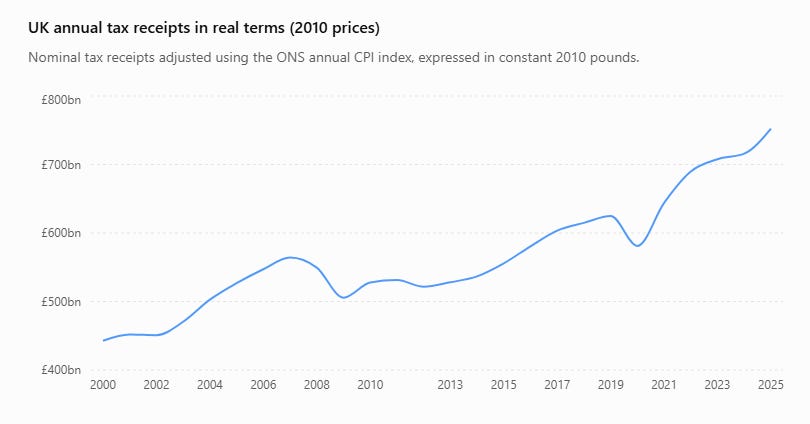
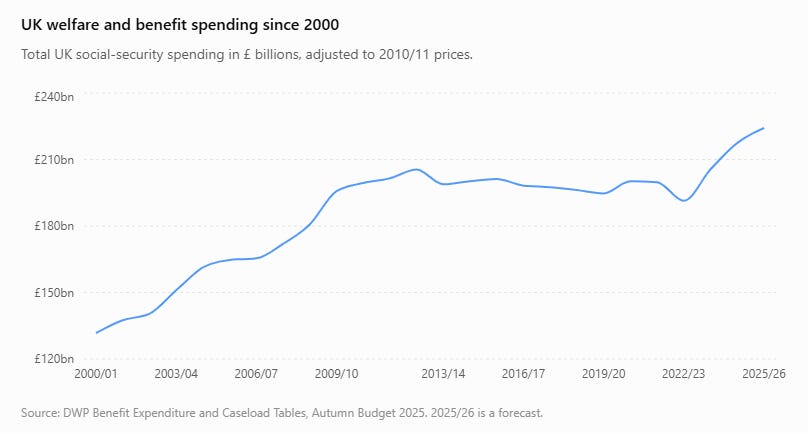
History has an irritating habit of working that way. The events that appear sudden are usually decades in the making.
That thought came back to me recently after receiving an email from a long-standing subscriber who suggested that my writings in the HindeSight Letter had too much political prejudice and I should focus more on investment. I have to admit, I could understand why he may have thought that. Over the past year we’ve discussed defence spending, taxation, energy policy, the NHS, regulation, welfare, borrowing and Britain’s deteriorating public finances. Read individually, some editions could easily be mistaken for political commentary.
But they aren’t. Or, at least, they were never intended to be. Perhaps this month is therefore a good opportunity to explain what HindeSight has always been about. It isn’t about politics. It isn’t about politicians and it certainly isn’t about telling readers how they should vote.
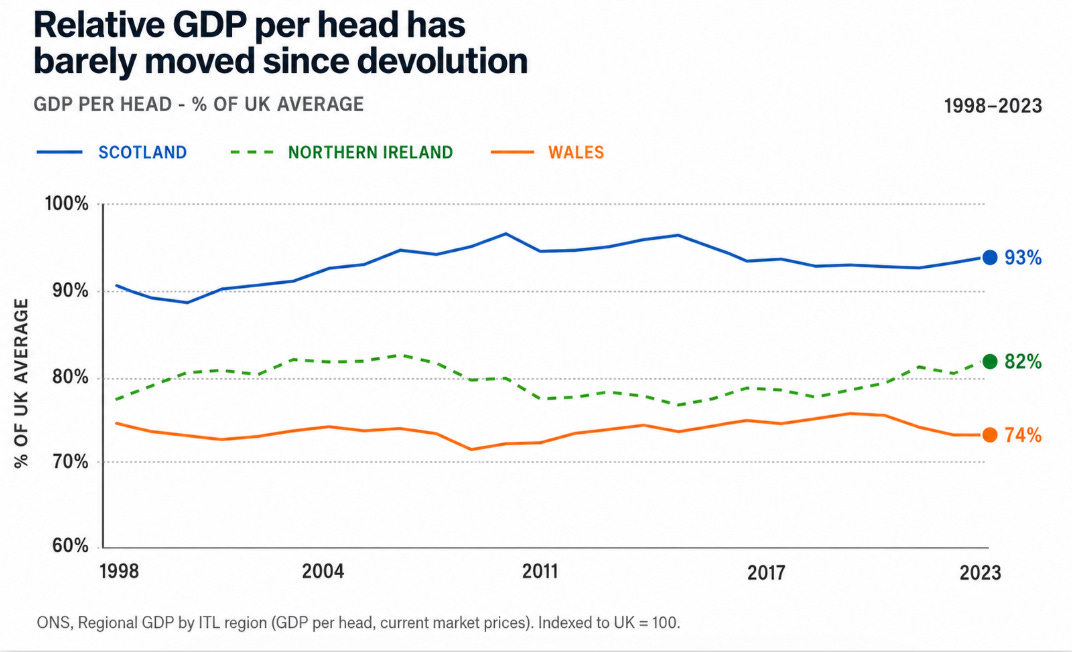
It is, and always has been, about one thing. To try to educate and inform readers about investment and the preservation and creation of wealth. Politics only appears because governments and their policies so often determine the rules under which wealth is either made easier or harder, created or destroyed. But, of course I am British and naturally prone to those great English wits-Sarcasm and Irony, which can sound like a rant at times, I admit. But, trench humour may be the best way of keeping sane with insanity all around us especially with current policies.
Taxation, regulation, monetary policy, borrowing, energy costs, property rights. To the majority of UK politicians, (most who have never worked in the private sector) these are ideological choices.
To investors they are simply incentives. And incentives determine where capital chooses to live. That last word is the important one. Capital. Capital has no passport. It has no emotions and doesn’t watch Question Time or care who occupies Number 10.
It simply asks one question. “Where am I likely to earn the best risk-adjusted return?”
For centuries that single question has shaped the rise and fall of cities, industries and nations.
It explains why Venice yielded to Amsterdam, why Amsterdam eventually yielded to London. Why New York overtook London, why manufacturing migrated eastwards and why Singapore flourished. And why investors ignore incentives at their peril.
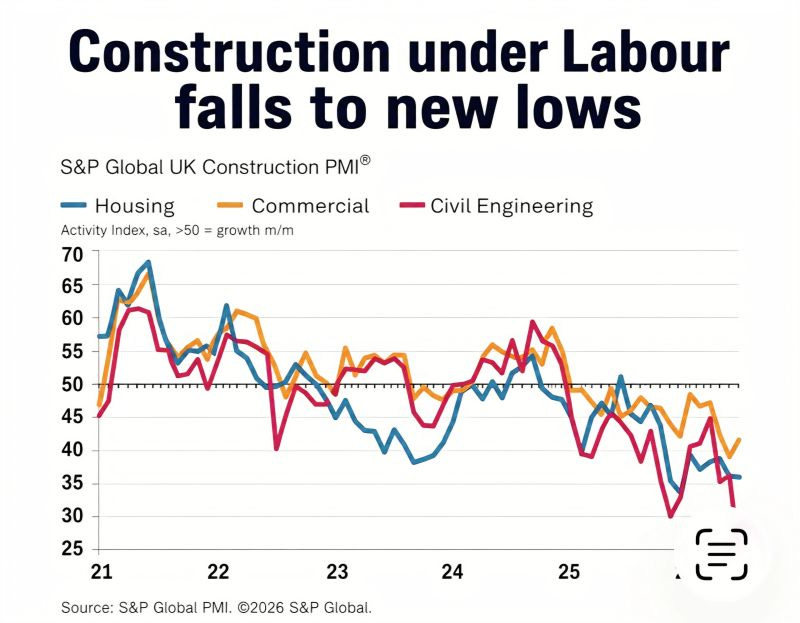
Source: S&P Global
One of the reasons I often begin these letters with stories from history is because history remains the greatest investment textbook ever written.
Every debt crisis, every inflationary episode, every speculative bubble, every currency collapse, every commodity boom, every period of national decline and every budget tax. Someone has already lived through it. The names may change as does the technology but human behaviour rarely does. History doesn’t repeat itself precisely, but incentives always rhyme.
Source: ONS, Adam Smith Institute
Source: Institute for Economic Affairs
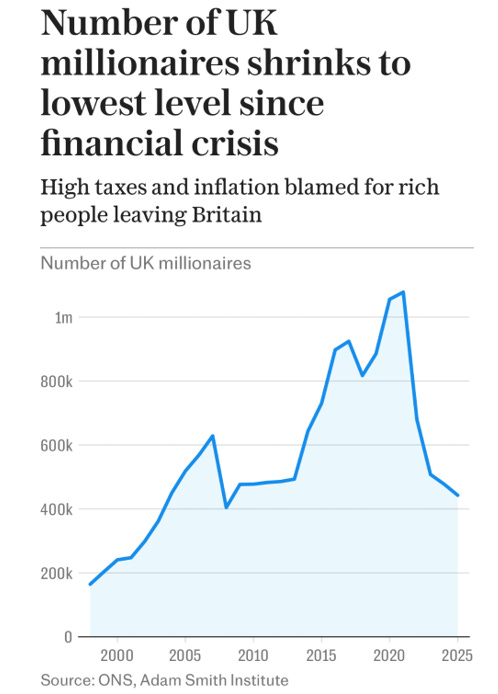
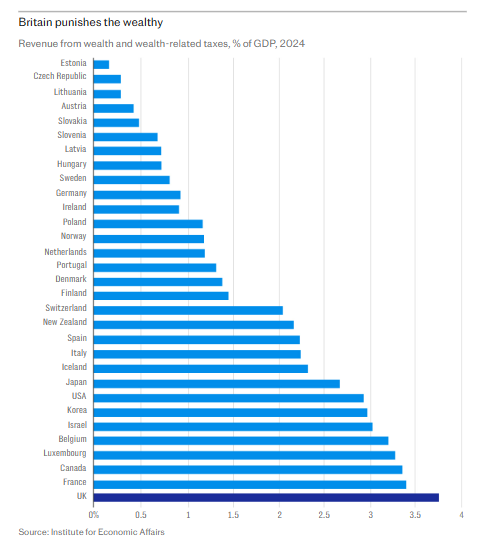
During my career I have also noticed something else, major change rarely announces itself. Countries don’t become poorer because of one budget, nor do businesses relocate because of one tax increase. Entrepreneurs don’t emigrate because of one regulation and currencies don’t lose purchasing power because of one poor decision.
Instead… one extra tax, another regulation, higher borrowing, rising energy costs, lower productivity and slightly weaker investment and another company decides not to expand or hire new staff. Another entrepreneur decides to leave and another overseas investor quietly decides to look elsewhere. I had an discussion/disagreement with a chap at a network event recently who told me that “all the talk of people leaving the country was media rubbish”. I could only respond that he was moving in the wrong circles, maybe in the public sector. In the last 18 months, I know several people personally who have left already or have re-domiciled, know of dozens who have or are planning to leave and I don’t get out anywhere near as much as I used to when I slouched around London for 30 years.
Individually, every decision appears almost insignificant, collectively, they alter the direction of travel.
Nothing happens, Until suddenly it does.
Which brings me to BP.
Today (Aug 1st), the company announced its intention to dispose of its remaining North Sea oil and gas business. Most newspapers so far have reported it as just another corporate transaction.
But, they are missing the point.
BP has been synonymous with the North Sea for more than sixty years. It helped create one of Britain’s greatest industrial success stories, generating employment, tax revenues, exports and energy security that successive governments relied upon for generations. Companies like BP do not quietly walk away from sixty years of investment because of one Finance Bill.
They leave because the economics have gradually changed, because incentives have gradually changed. Because capital has gradually reached a different conclusion. Because an effective tax rate of 78% just doesn’t make the effort worthwhile.
BP isn’t really the story, BP is the evidence. The same pattern appears elsewhere. Successful entrepreneurs are relocating overseas. Private companies choose to expand elsewhere. Listed businesses disappear from the London market. At last count, we have had 11 FTSE companies taken out of UK circulation, the last few being very well-known such as EasyJet, Tate & Lyle and Rotork. Even as I write this today, yet another FTSE company, DCC Energy, a £5.75bn energy company has agreed to a private equity takeover.
BP employs 14,000 people in the UK and has had its headquarters here for over a century but no one should be surprised in the coming years to see them scale down, change their listing and move their headquarters to the US where they are better treated.
Highly skilled people increasingly see their future beyond Britain’s shores. While each headline looks different, the underlying cause is remarkably similar. Capital is voting. Not in a ballot box, with its feet-everything is connected. Tax influences behaviour, behaviour influences investment, investment influences productivity, productivity determines living standards, living standards influence politics, politics changes tax. Round and round the wheel turns.
That is why HindeSight occasionally sounds political. Not because politics is the destination, but because it is one of the roads that capital travels. If, at times, these pages have sounded more political than I intended, then perhaps that is my fault rather than yours. I have probably concentrated too much on the symptoms and not enough on the underlying diagnosis. One of my overriding beliefs in life is to learn from mistakes and experience. The often misattributed quote to Einstein, “The definition of insanity is repeating the same thing over again and expecting a different result” has always made sense. ie. If it was a sh*t idea the first time, it probably still is! Just like invading Russia in late June and expecting a good result, it doesn’t happen. (Napoleon-1812), (Hitler-1941).
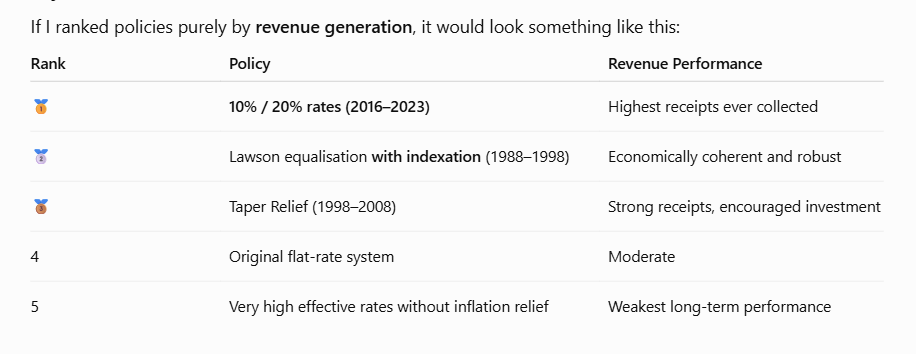
A current policy example of this would be the recently mooted tax change to raise Capital Gains tax from 19-28% up to the same level as income tax, 20-45% by many new members of the government. Of course, like most policies this has been tried before, by no less than the quite legendary UK Chancellor, Nigel Lawson in 1988. His equalisation of Capital Gains tax and Income Tax was comparatively seen as quite fair and reasonable, but mainly because it included an indexation allowance for inflation. You were only getting taxed on the real gain on capital, not a gain as a result of continued currency debasement and inflation. But, it didn’t work particularly well, tax receipts were far less than expected, so it was ditched in time.
If you asked your friendly AI companion what policy historically has got the highest inflation adjusted tax receipts, you get the table below. Of course, the current potential policy is (5) with the weakest receipts expected. As capital gains tax receipts are only 2% of the total HMRC take, compared to 36% for income tax, a logical person would question why so much air time. I’m afraid, it’s all part of the age-old socialist manifesto, “Tax the working and entrepreneurial rich to provide welfare for benefits for the unemployed”. And those who have CAPITAL must by definition be rich, no? But, the crux of the matter is that capital is just investment and without invested capital being welcomed and treated fairly, it will go elsewhere and all the benefits such as employment and ancillary spending go with it. It’s not rocket science, but you do need to know your history and understand what works and what doesn’t.
So let me end with a reminder of why this letter exists.
HindeSight is not published to predict elections, it is not written to support governments and any criticism of their policies is purely to highlight the challenges those policies will have on investment and wealth creation. It exists to help readers recognise long-term trends before they become obvious to everyone else.
History whispers long before it shouts. Our job as investors is to hear the whisper.
Because by the time everyone finally hears the bang...
...the opportunity has usually passed.
The HindeSight Letter has never been about politics. It has always been about investment wealth preservation.

INVESTMENT INSIGHTS
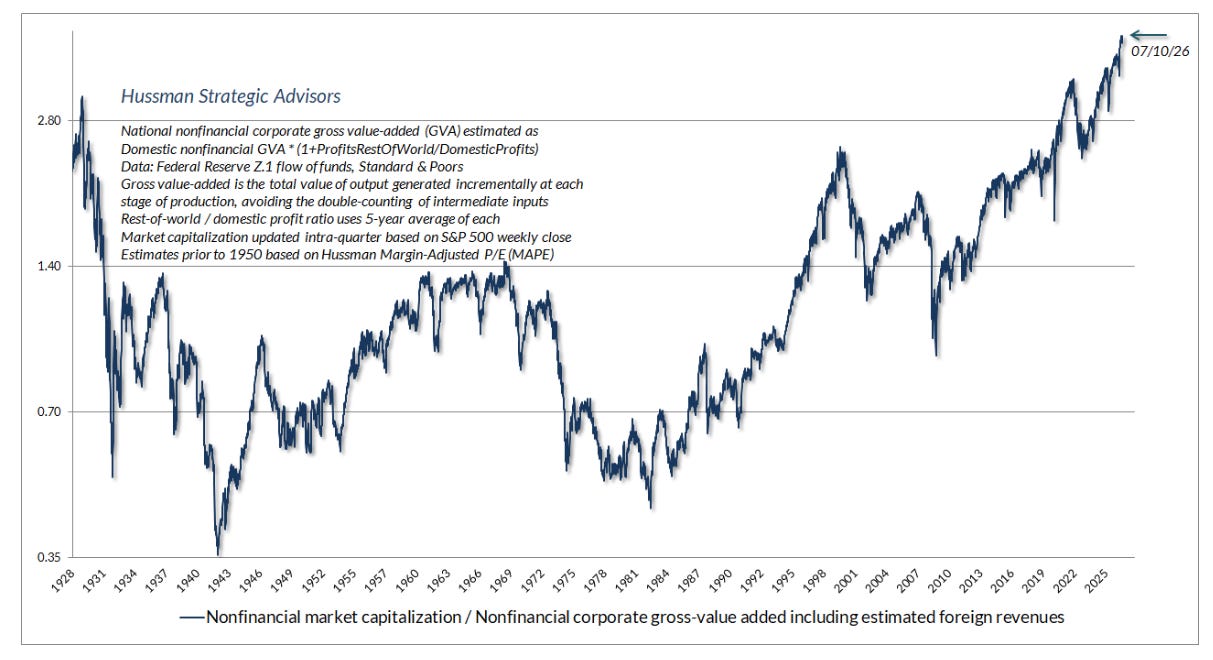
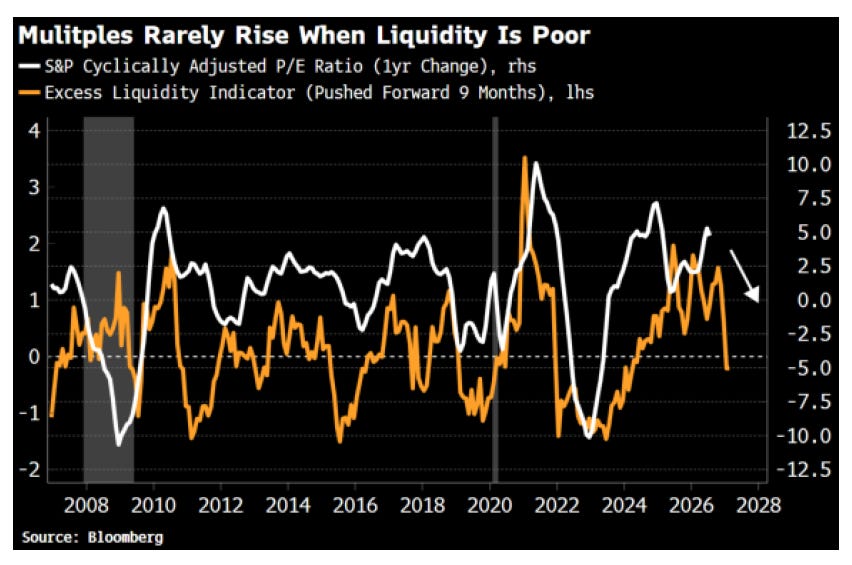
Last week, we heard Jamie Dimon say he wouldn’t buy stocks or Treasuries at current prices. This is not Mark Mahaffey, some random ex-city guy who rants/writes a newsletter, this is the long-time CEO of JP Morgan, the largest bank in the world by market capitalisation. The two main asset classes of most portfolios and Jamie has his hands down on both! Of course, it’s easy to look at very well-known charts from Hussman and understand sky-high equity valuations compared to all history or marvel at the amount of leverage around with the whopping levels of margin debt but it’s still quite a statement.
Source: Hussmanmarketcomment
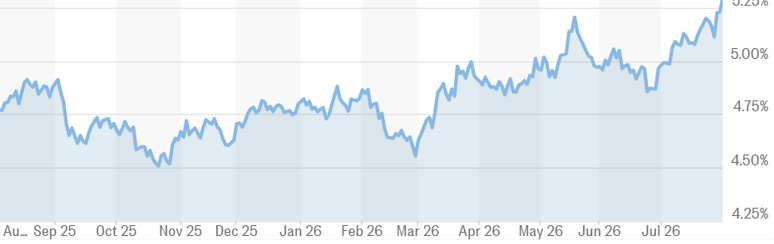
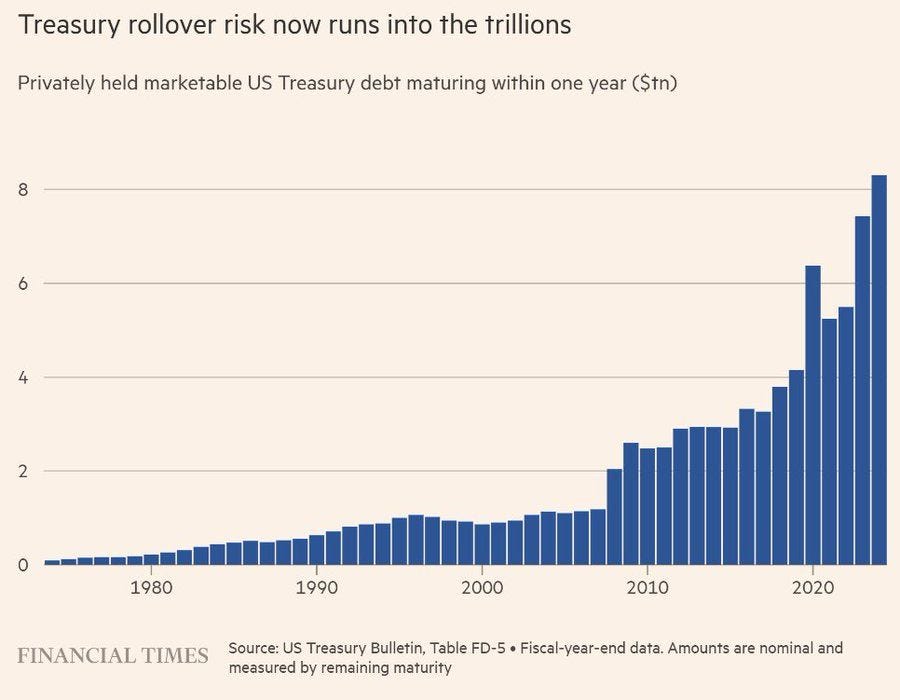
In fixed income, at least we seemingly have better ‘value’ than in the last few years as long-term debt yields 5-6% in UK and US. But the problem is that inflation looks very stubborn and who can blame it with the soaring money supply amid fiscal indebtedness everywhere you look. Governments just don’t have the income to satisfy their ridiculous level of promised spending buying off the electorate and now their ‘credit card’ is tapped out and the debt interest is eating into the pie too. Talk about “between Scylla and Charybdis” for any policy makers. At some juncture of tipping point, rising interest rates will bring the house down in style as it has done historically.
US Treasury 20-year yield, 1-year
Source: Marketwatch.com
Source: US Treasury Bulletin
Source: Simon White, The Macroscope, Bloomberg
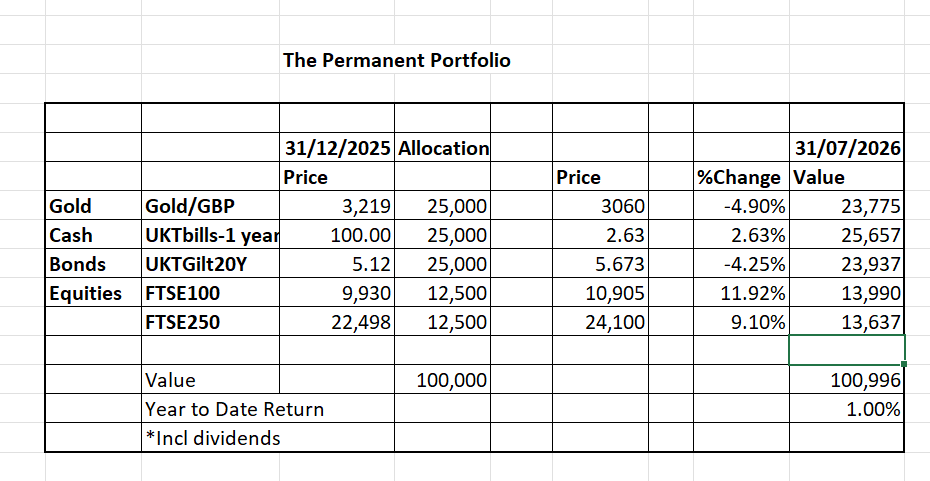
Our permanent portfolio is up a mere 1% this year, with gold and long bonds negating the performance of the UK equity indices. Apart from the constant presence of overseas bargain hunters looking for ‘cheap’ UK stocks, we are benefitting from steeper yield curves, (banks) and oil and commodity rises helping their associated large caps and as the table below shows us, the cash flow is also allowing UK to employ buy-back strategies that has long been seen in the US.
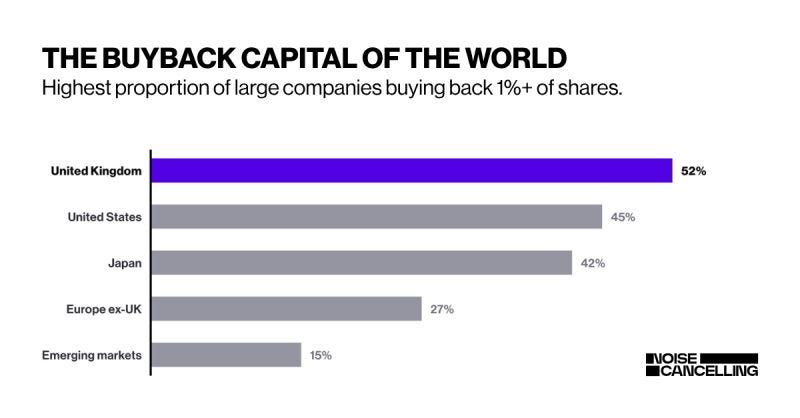
Source: Noisecancelling
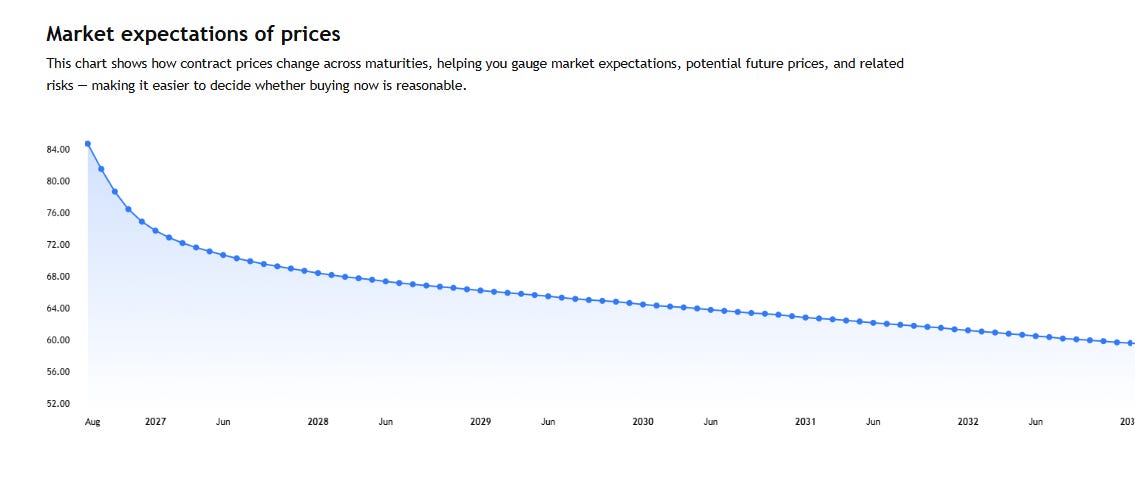
A few other charts and tables caught my eye this month, starting with the slightly odd sounding ‘crack spread’. While the Iran/Hormuz Strait war lingers on with the markets seemingly less frantic about every $1 move in the spot price these days, the crack spread is at all time highs.
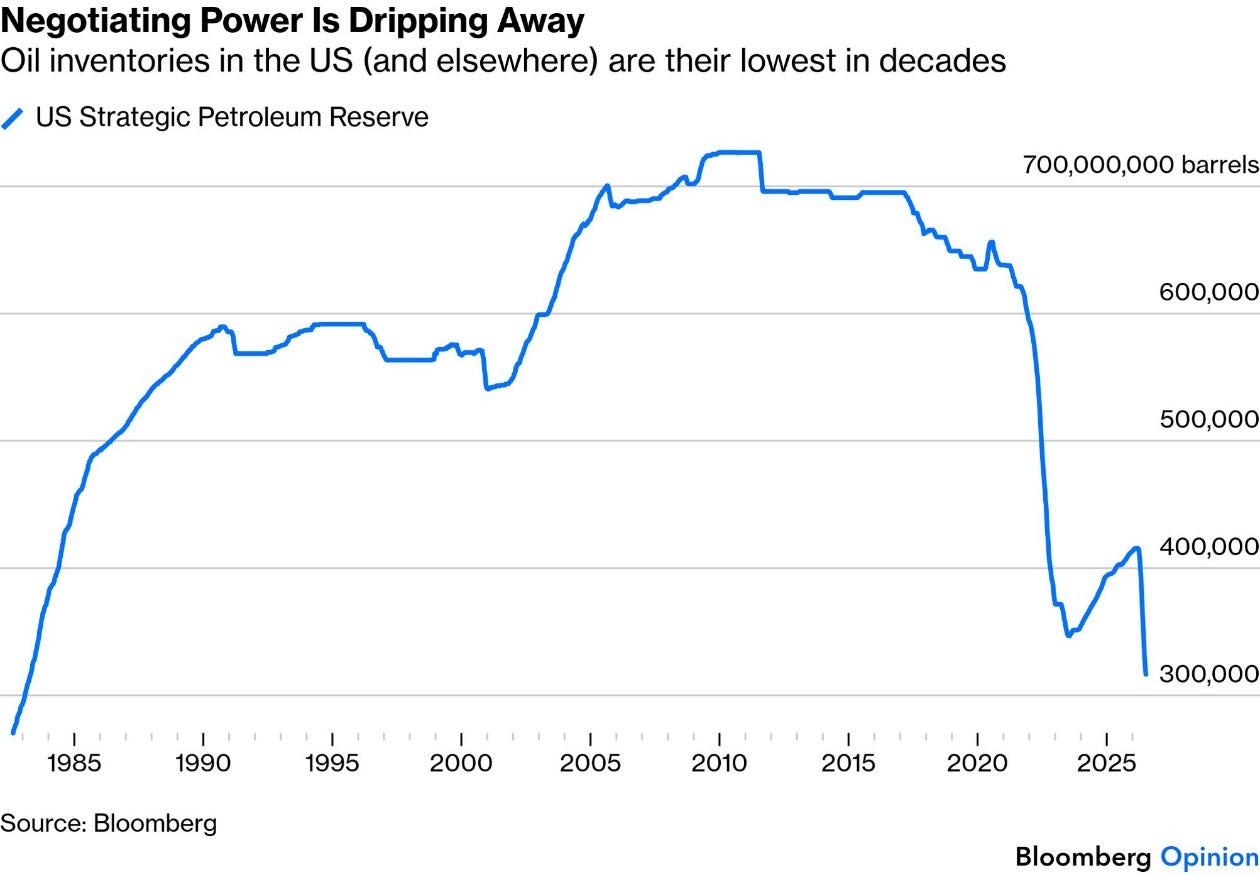
The crack spread in basic terms is the catalytic ‘cracking’ of the long hydrocarbon molecules of crude oil by the refiners into shorter, more valuable molecules, namely petrol, diesel, jet fuel etc. The market-used spread terms take the prices of six parts/barrels of crude oil, relative to three gasoline, two heating oil and one diesel with the difference/spread being the ‘profit’. Ie. You make more out of your raw material of crude oil at a high spread than low. Obviously, this is a good time for refiners but unfortunately one of the reasons why prices at the pump aren’t coming down is while we have less oil supply worries, we have a severe shortage of refining capacity. With oil inventories back to their lows, you would naturally expect the backwardation of oil prices where the forward prices are considerably lower than spot. You can certainly understand investors’ appetite for refiners such as BP Plc, despite their UK pull-back every time the dividend yield gets back to 5%.
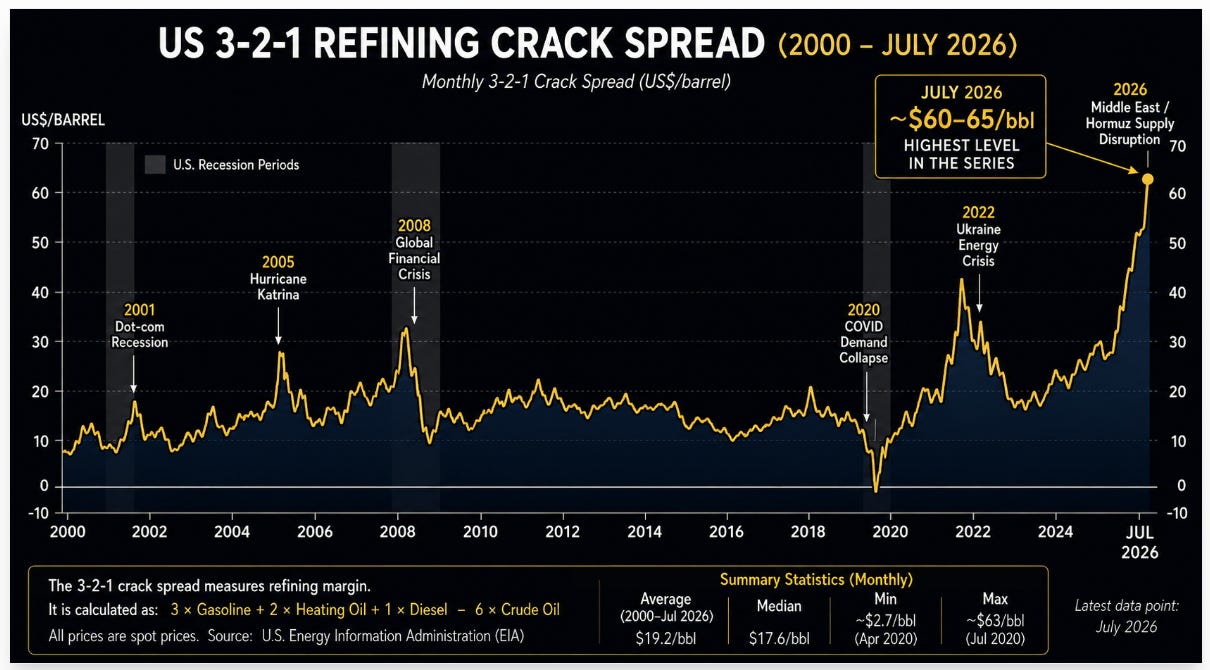
Source: US Energy Information Administration (EIA)
Brent Crude Price, 5-years
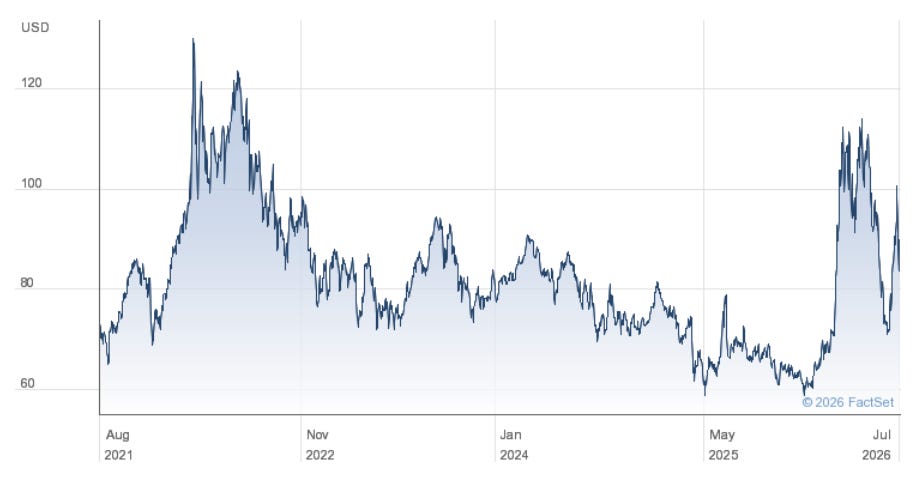
Source: Hargreaveslansdown
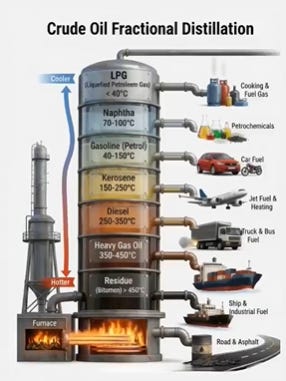
Source: Visualcapitalist.com
Light Crude Oil Futures, Forward Curve
Source: Tradingview
Source: John Authers, Points of Return, Bloomberg
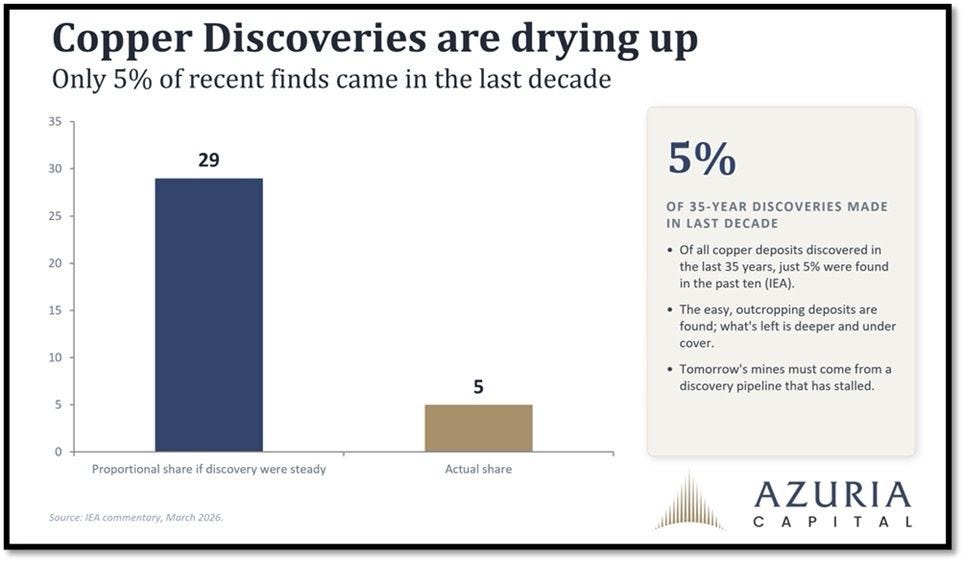
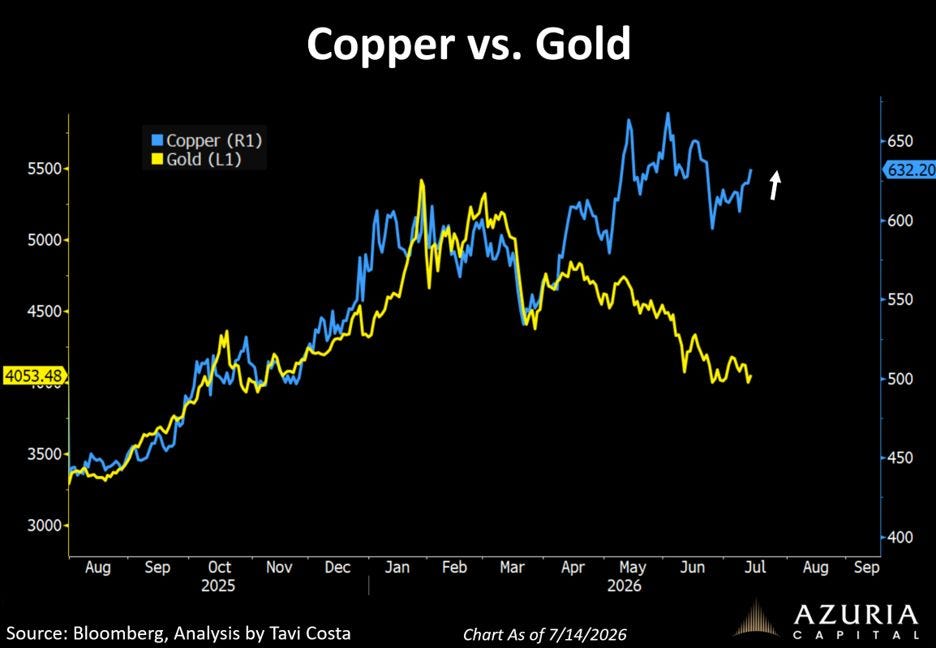
Second up, the continuation of understanding the needs and demands for copper and the current market conditions. Every aspect of our current narrative leaves us in no doubt regarding copper demand whether it is the AI-related infrastructure or the increased electrification needs as a result. You have the growing electric car demands, far more copper-intensive than fuel-combustion as well as expansive renewable energy plans. The trouble is there is far less around than there used to be. While copper deposits have much longer mine life than gold for example, copper veins can be mined for decades, we are discovering less than before. Prices are rising as a result. One of the charts, (courtesy of well-known guru, Tavi Costa, now at Azuria Capital) below shows the lack of pullback in copper prices that has been seen in gold prices in the last four months.
Stocks such as Rio Tinto, BHP and Antofagasta which have featured many times in The HindeSight Letter over the years are often the main beneficiaries of commodity bull trends and any pull-backs in price levels should be considered.
Source: Tavi Costa, Azuria Capital, Bloomberg
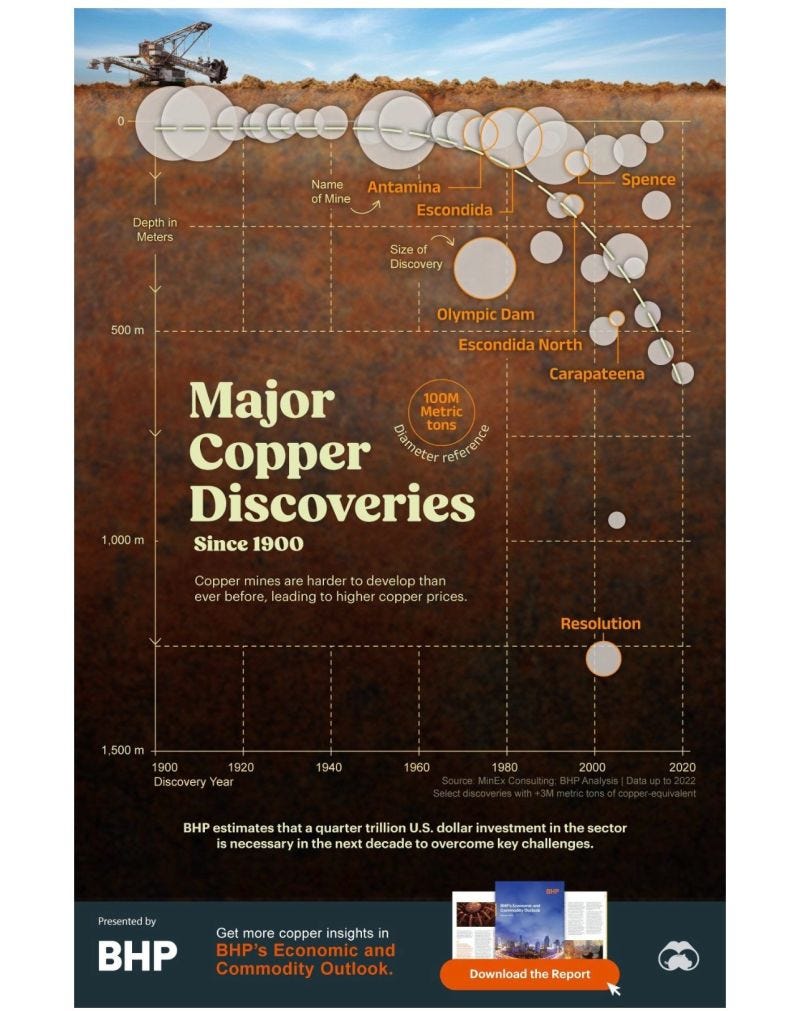
Source: BHP
Lastly, a chart of the Korea stock market index, (KOSPI) which has been getting its fair share of attention in the press of late. While it has long been a rather dull overseas market, suffering the same discount as the Japanese stock market, the last year has been a helluva ride, from early January 2025 to the recent June highs, some 250%+. It has been the beneficiary, both from similar positive policy reforms as seen in Japan regarding corporate governance, but mainly as a result of the AI and semi-conductor mania. No doubt, in downtown Seoul, there are shoeshine boys trading Korean stocks and giving tips. Although, we do have to remember the two biggest index stocks, Samsung & SK Hynix currently make up 55-60% of the index, scary in itself. When you consider, that Microsoft & Nvidia make up just 16% of the S&P 500, and Astrazeneca & HSBC make up 15% of the FTSE100, there might be a problem here, Houston. But, right now… And as usual a few extra charts and tables from the month.
KOSPI (Korea) Composite Index, 5-years
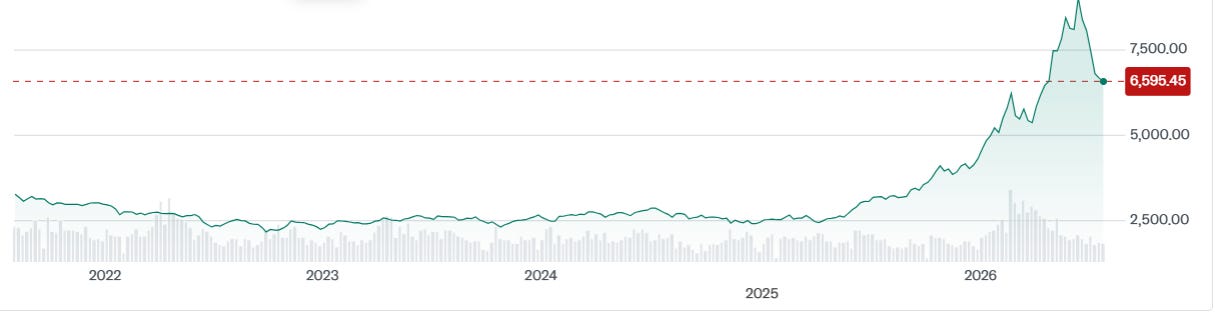
Source: Yahoofinance
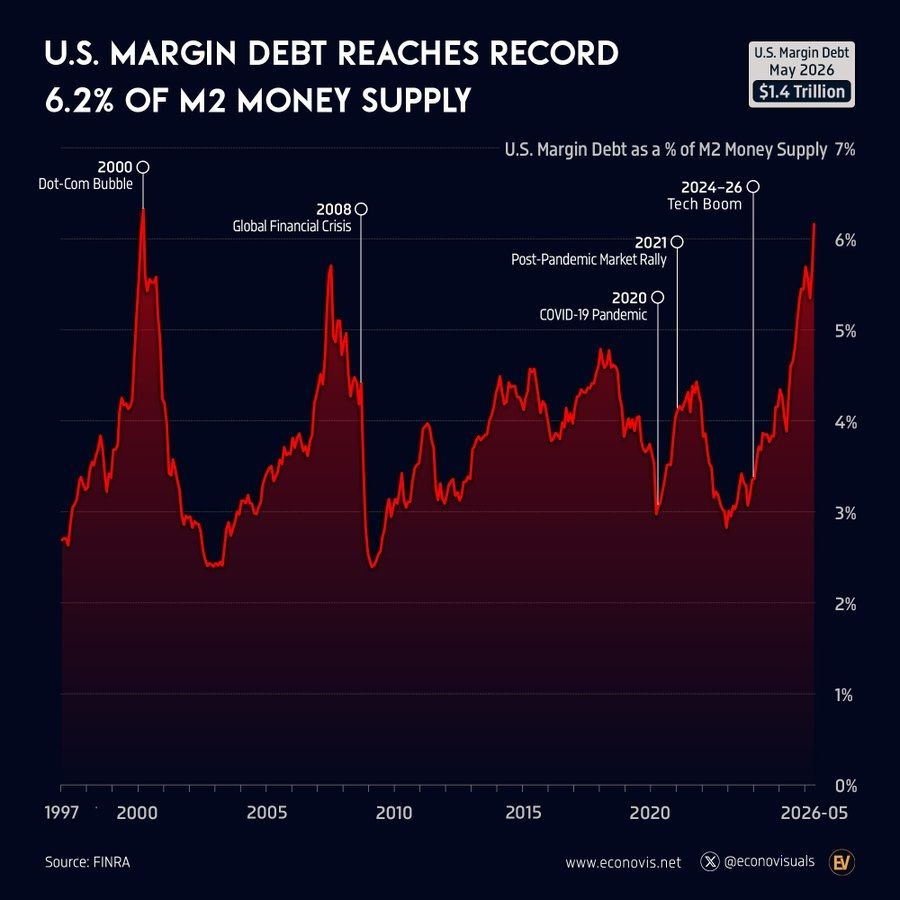
Source: FINRA, www.econovis.net
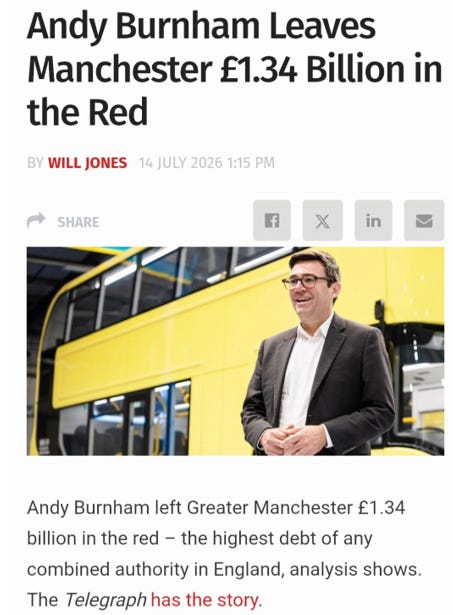
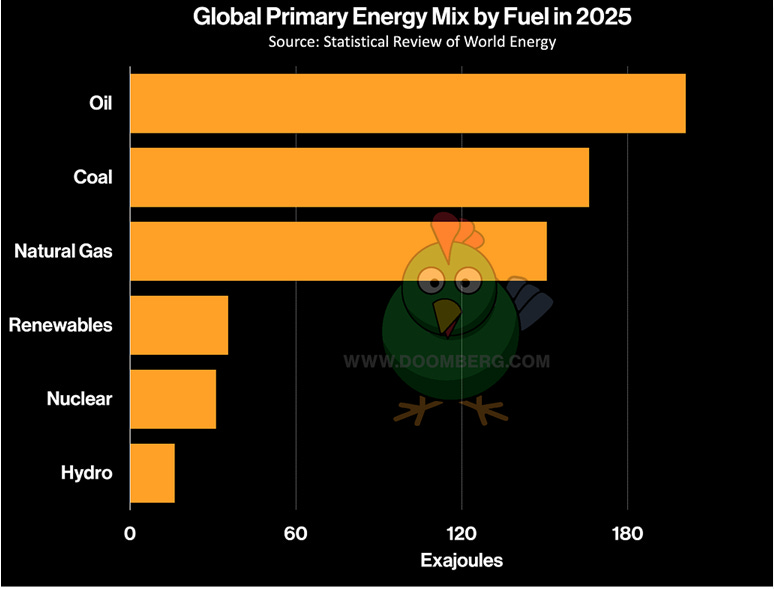
Source: Bloomberg
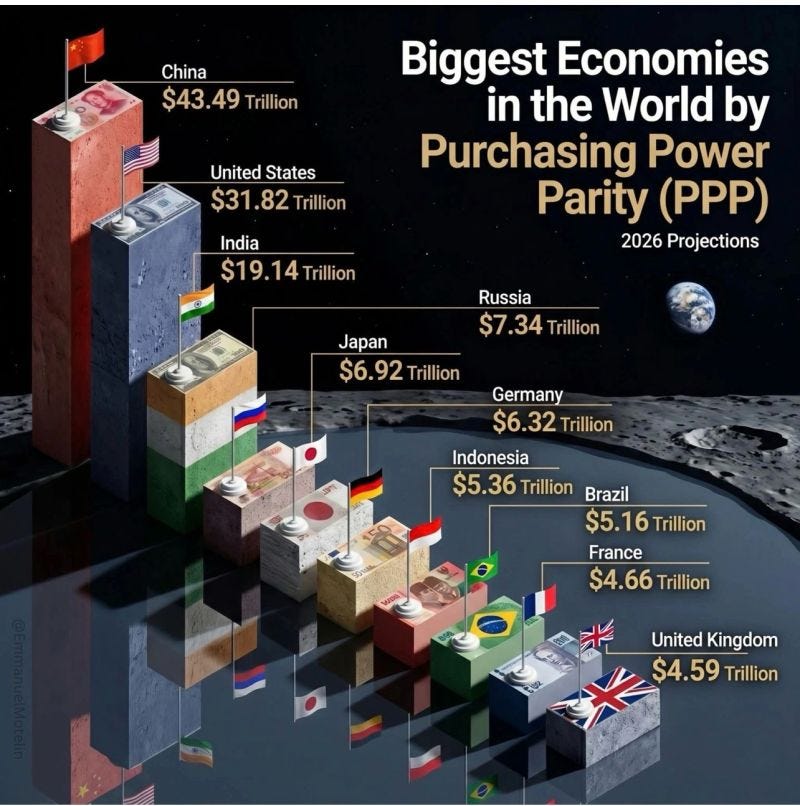
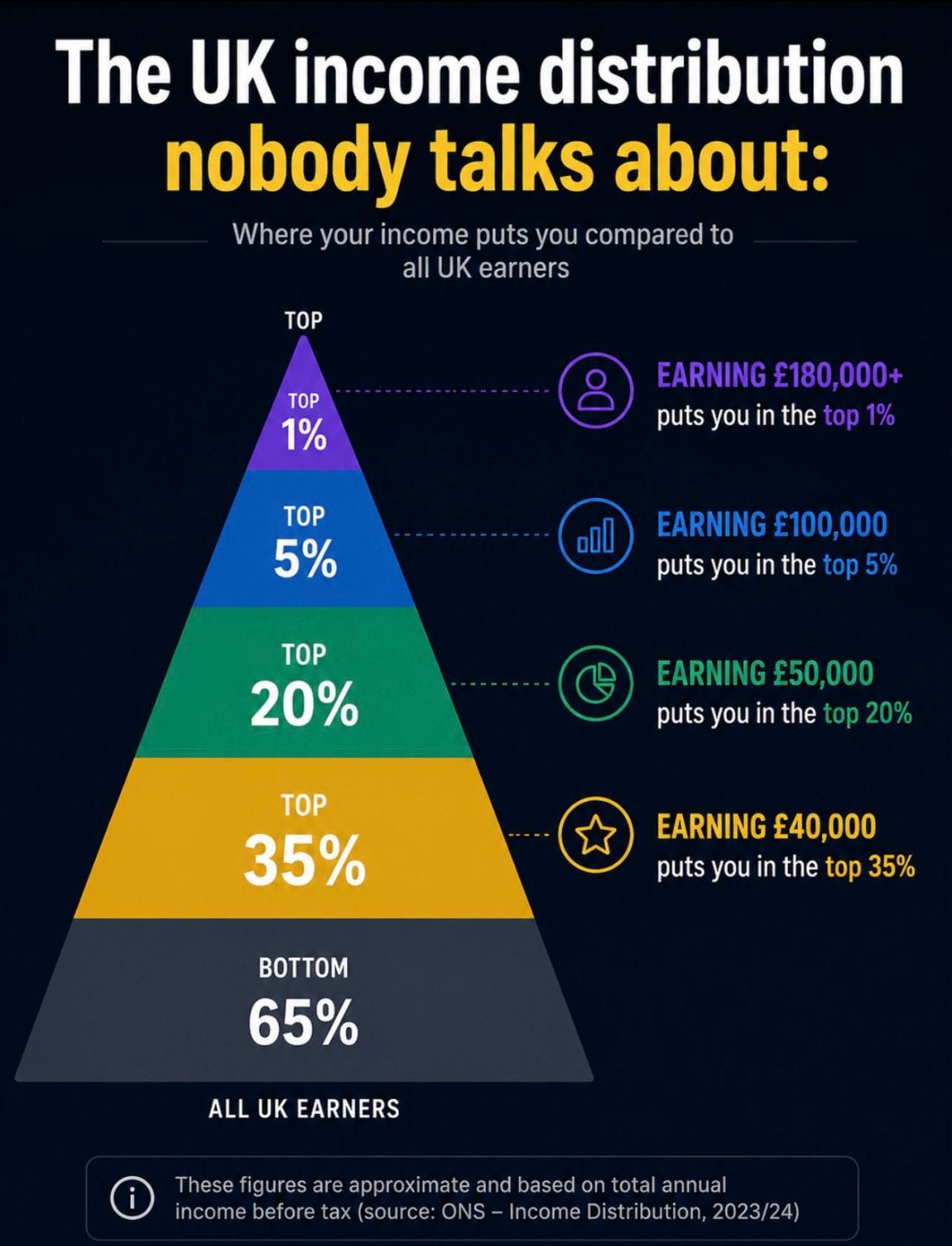
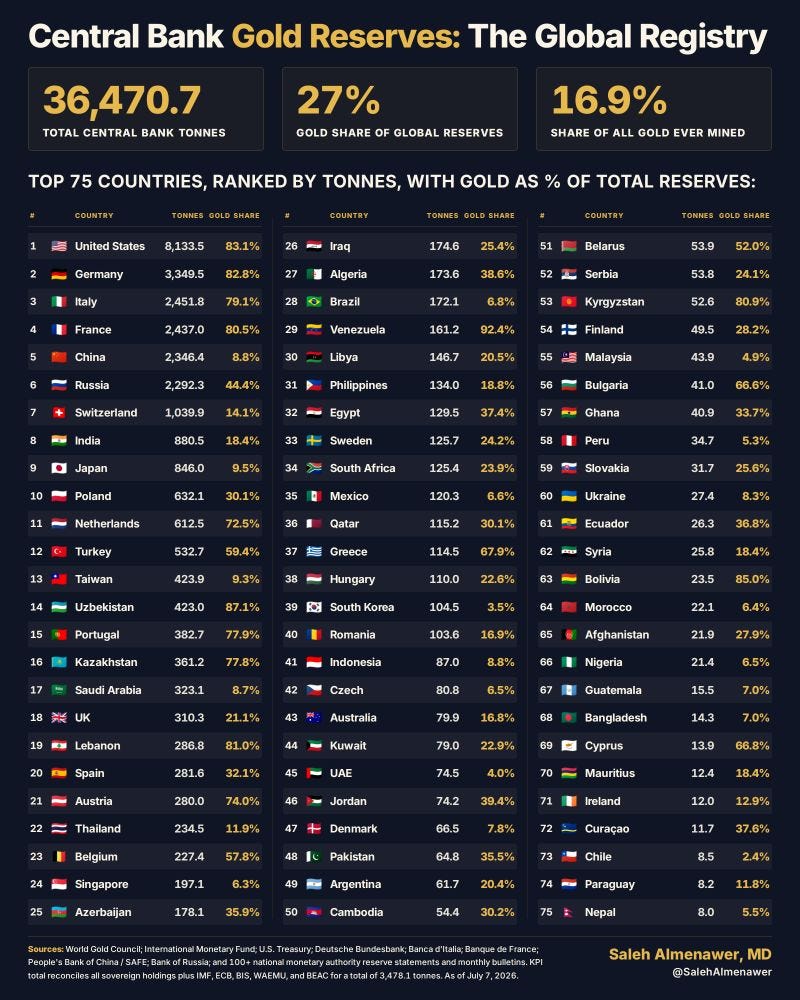
Source: Saleh Almenawer, MD, World Gold Council
HINDESIGHT PORTFOLIO UPDATE (JULY 2026)
There was one CLOSE alert and no open alerts, 3rd July-31st July;
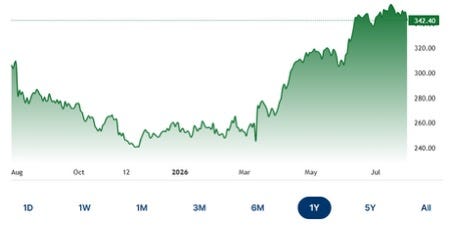
· CLOSE ALERT : TP ICAP Plc, (TCAP), 20th July, Exit price 350p, Absolute return 42.3%, Relative return 45.4%, Days held 143 days, (Annualised 107.9%)
Share Price, TP ICAP, (TCAP), 1-year
Source: HargreavesLansdown

I always remember the sketch in Blackadder where Lieutenant George Barleigh is being admonished about not telling the group that he was such an accomplished artist, “One doesn’t like to blow one’s trumpet” leading Captain Blackadder to remark, “You could have told us you owned a trumpet”!
Sorry, random anecdote….
We exited TCAP this month for a great profit of 42.3% after just 143 days and by many M&A metrics that is a straightforward 107.9% annualised return. With 5% of the return coming from the dividend payment and beating the index as well, it’s HSL selections like these that keep us interested in doing this. Pity there aren’t more relative easy opportunities at this time.
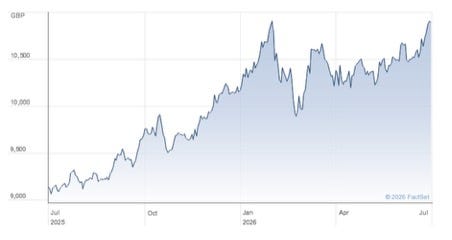
The FTSE indices, especially the FTSE100 continues to perform strongly, up almost 12% YTD including dividends. While we understand the cheapest of some stocks in relation to the overseas M&A interest, the rising interest rates, especially in the long end should be seen as a worry for continued strength.
Share Price, FTSE 100, 1-year
Source: HargreavesLansdown
Have a look at the full Portfolio #1 below.

Happy Investing!